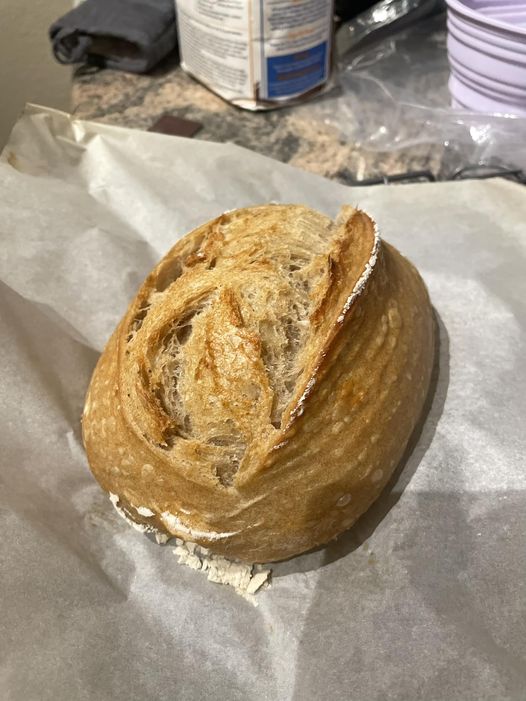
Creating the best sourdough loaf involves patience, quality ingredients, and proper technique. Here’s a step-by-step guide to making a perfect sourdough loaf at home.
Best Sourdough Loaf Recipe
Ingredients:
- 500g bread flour (preferably high-protein)
- 350g water (room temperature)
- 100g active sourdough starter (fed and bubbly)
- 10g salt
Equipment:
- Large mixing bowl
- Bench scraper
- Banneton (proofing basket) or a bowl lined with a floured kitchen towel
- Dutch oven or a heavy oven-safe pot with a lid
Instructions:
- Autolyse:
- In a large mixing bowl, combine the flour and 325g of water (reserve the remaining 25g). Mix until no dry bits of flour remain. Cover the bowl with a cloth and let it rest for 30-60 minutes. This process is called autolyse and helps develop the gluten.
- Mixing and Adding Starter:
- After the autolyse, add the active sourdough starter to the dough. Mix well using your hands until fully incorporated. Let the dough rest for 20 minutes.
- Adding Salt:
- Dissolve the salt in the remaining 25g of water. Add this salted water to the dough. Mix until the salt is fully incorporated. The dough will become slightly more elastic and easier to handle.
- Bulk Fermentation with Stretch and Fold:
- Cover the dough and let it rest at room temperature for 3-4 hours, depending on the temperature of your kitchen. During this time, perform 3-4 sets of “stretch and folds” every 30-45 minutes:
- To stretch and fold, grab one side of the dough, stretch it upwards, and fold it over itself. Rotate the bowl a quarter turn and repeat on the other three sides. This strengthens the dough.
- Cover the dough and let it rest at room temperature for 3-4 hours, depending on the temperature of your kitchen. During this time, perform 3-4 sets of “stretch and folds” every 30-45 minutes:
- Pre-Shape and Rest:
- After the bulk fermentation, gently turn the dough out onto a lightly floured surface. Pre-shape it into a round by folding the edges into the center. Let the dough rest for 20-30 minutes, uncovered.
- Final Shaping:
- After the dough has rested, shape it into its final shape. For a round loaf, gently stretch the dough and fold the sides inward to form a tight ball. Place the dough, seam side up, into a well-floured banneton or bowl lined with a floured cloth.
- Final Proof:
- Cover the dough and let it proof at room temperature for 2-4 hours, or until it has puffed up slightly. Alternatively, you can refrigerate it overnight for a slow, cold proof, which will develop more flavor.
- Preheat the Oven:
- About 30-45 minutes before baking, preheat your oven to 475°F (245°C) with a Dutch oven inside.
- Scoring and Baking:
- When ready to bake, carefully turn the dough out onto a piece of parchment paper. Score the top of the loaf with a sharp knife or razor blade, making a deep slash to allow the loaf to expand.
- Carefully transfer the dough (on the parchment paper) into the preheated Dutch oven. Cover with the lid and bake for 20 minutes.
- After 20 minutes, remove the lid and reduce the oven temperature to 450°F (230°C). Continue baking for another 20-25 minutes, or until the crust is deep golden brown.
- Cool:
- Remove the loaf from the Dutch oven and let it cool on a wire rack for at least 1 hour before slicing. This allows the crumb to set and the flavors to develop.
Tips for Success:
- Active Starter: Make sure your sourdough starter is active and bubbly before using it. Feed it 4-6 hours before you plan to start your dough.
- Temperature: Sourdough fermentation times vary based on room temperature. Warmer kitchens will require shorter fermentation times, while cooler kitchens will need longer.
- Hydration: Adjust the water content slightly depending on the humidity and your flour. The dough should be slightly sticky but manageable.
This sourdough loaf will have a crispy crust, a tender crumb with an open structure, and a tangy flavor that’s characteristic of a well-fermented sourdough. Enjoy the process and the rewarding results!
4o
