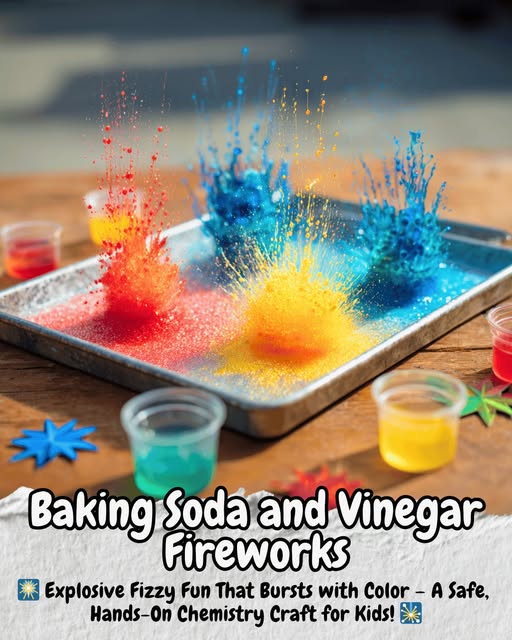
🎆 Baking Soda and Vinegar “Fireworks” Experiment
🔬 What’s Happening?
When baking soda (a base) reacts with vinegar (an acid), they create carbon dioxide gas. This bubbling reaction can create fun fizzy bursts — like a mini firework display — especially when paired with food coloring or glitter for effect.
🔹 Materials Needed:
-
Baking soda
-
White vinegar
-
Food coloring (variety of colors)
-
Small bowls or cupcake pan
-
Pipette, dropper, or spoon
-
Glitter (optional)
-
Tray or baking sheet (to catch overflow)
🧪 Instructions:
-
Set the Stage:
-
Place your bowls or muffin tin wells on a tray to catch any mess.
-
Put 1–2 tablespoons of baking soda into each bowl or well.
-
-
Add Color:
-
Sprinkle a few drops of food coloring over the baking soda.
-
(Optional) Add glitter for extra sparkle.
-
-
Start the Fireworks:
-
Use a dropper, pipette, or spoon to slowly add vinegar over the baking soda.
-
Watch the colorful fizzing and bubbling reactions erupt like mini fireworks!
-
-
Keep Going:
-
You can keep adding vinegar or baking soda for more bursts.
-
Try layering colors or using clear cups to see the reaction from the side.
-
🧼 Cleanup Tips:
-
Everything is non-toxic and safe for kids (though not edible!).
-
Clean with warm water — vinegar and baking soda are natural cleaners.
🌈 Fun Variations:
-
Glow Fireworks: Use tonic water (contains quinine) under a blacklight for a glowing effect.
-
Frozen Fireworks: Freeze colored vinegar into ice cubes and place them on baking soda for a slow, fizzy melt.
-
Firework Painting: Do this on paper and let the reaction stain the paper with colorful splatters.
Would you like a printable activity sheet or ideas for turning this into a STEM lesson for kids?
