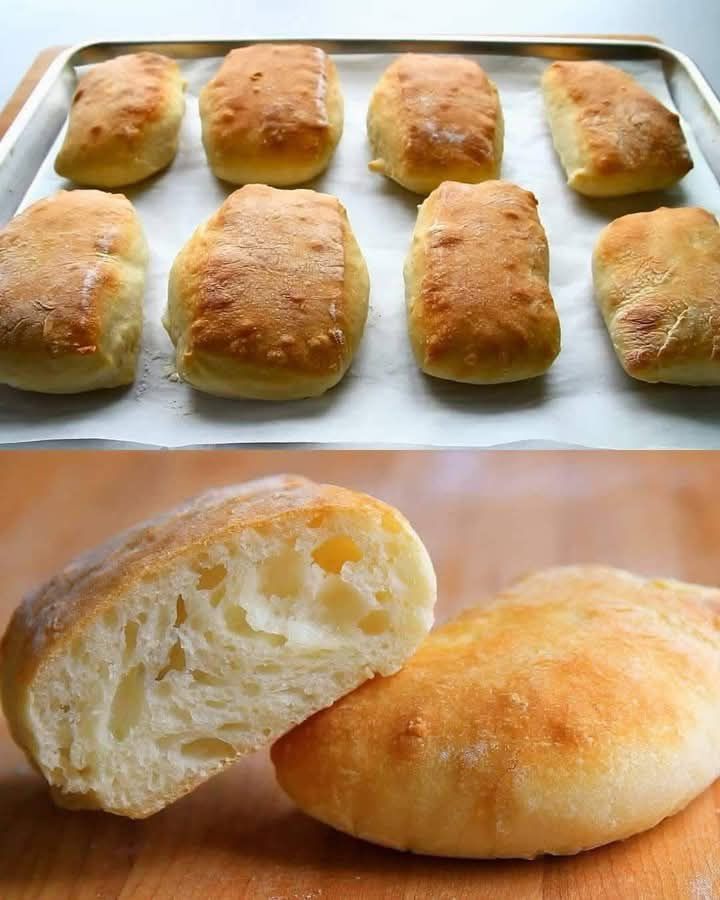
Making Ciabatta bread at home results in a rustic, crispy-crusted bread with an airy, open crumb. It’s a bit of a longer process due to the need for a starter (biga), but the end result is well worth the effort! Here’s a step-by-step guide to making Ciabatta bread from scratch:
Ingredients:
For the Biga (Starter):
- 1 cup (120g) all-purpose flour
- ½ teaspoon instant yeast
- ½ cup (120ml) water (room temperature)
For the Ciabatta Dough:
- 2 ½ cups (300g) all-purpose flour
- 1 ¼ teaspoons salt
- 1 teaspoon instant yeast
- 1 cup (240ml) water (room temperature)
- 2 tablespoons olive oil
- All of the biga (starter)
Directions:
1. Make the biga (starter):
- In a medium bowl, combine the flour, yeast, and water for the biga. Stir until all the ingredients are well mixed into a sticky dough.
- Cover the bowl with plastic wrap or a clean towel and let it rest at room temperature for 12-16 hours (overnight works great). It should become bubbly and slightly fermented.
2. Make the ciabatta dough:
- In a large bowl, combine the flour, salt, and yeast for the dough.
- Add the biga (starter), water, and olive oil to the bowl with the dry ingredients. Mix it all together using a wooden spoon or your hands until you have a sticky, shaggy dough. The dough will be wetter than most bread doughs, but that’s what makes ciabatta so airy!
3. Knead the dough:
- Transfer the dough onto a well-floured surface. Since the dough is very sticky, use a bench scraper or your hands to gently stretch and fold it over itself. You can also use the “slap and fold” method to help develop the gluten:
- Pick up one side of the dough and fold it over. Then, using your hands, slap the dough onto the counter and fold it again.
- Repeat this process for about 5-7 minutes. The dough will start to feel a little smoother but will still be quite sticky.
4. First rise:
- Transfer the dough into a lightly oiled bowl and cover it with plastic wrap or a damp cloth.
- Let it rise for 1-1.5 hours or until it has doubled in size.
5. Shape the dough:
- Gently punch the dough down to release any air bubbles.
- Turn it out onto a well-floured surface and divide it into two equal portions (for two loaves) or leave it as one large loaf.
- Gently shape the dough into a rough rectangle or oval shape, being careful not to deflate it too much.
- Place the shaped dough onto a well-floured kitchen towel or parchment paper (this will help with the second rise). Make sure the dough is not overcrowded so it can expand freely.
6. Second rise:
- Cover the dough loosely with a towel and let it rise for another 45 minutes to an hour. During this time, the dough should puff up nicely.
7. Preheat the oven:
- Preheat your oven to 475°F (245°C). Place a baking stone or inverted baking sheet in the oven to heat up.
- If you don’t have a baking stone, you can use a regular baking sheet, but a stone helps create a better, crispier crust.
8. Bake the ciabatta:
- When the oven is preheated, gently slide the shaped dough onto the hot baking stone or baking sheet.
- To create steam (which will help achieve that crispy crust), you can place a shallow pan of water on the bottom rack of the oven or spray the inside of the oven with water a couple of times.
- Bake for 25-30 minutes or until the bread is golden brown and sounds hollow when tapped on the bottom.
9. Cool:
- Remove the bread from the oven and allow it to cool on a wire rack before slicing.
Tips:
- Hydration: Ciabatta dough is very wet compared to other bread doughs, so be patient when handling it! It’s what gives it that delicious, airy crumb.
- Biga Starter: The long fermentation time for the biga adds great depth of flavor, so don’t skip this step. It’s the key to authentic ciabatta.
- Oven Steam: Adding steam in the oven creates the crispy crust that ciabatta is known for. You can also mist the dough with water before baking to get that effect.
- Shaping: Don’t over-handle the dough when shaping. Keep as much air in the dough as possible for the open crumb texture.
Enjoy your Ciabatta bread with olive oil, balsamic vinegar, or as a sandwich base! Let me know how it goes!
